What to keep in mind
- Pause before adding another point or defending your own position.
- Check your wording and ask what the other person understood.
- Return to the concern and agree on a next step or a time to continue.
You raise a concern and the response is immediate.
“That wasn’t my fault.”
“You do the same thing.”
“So now everything is my responsibility?”
You may feel tempted to argue, explain yourself more loudly or give up on the conversation altogether.
When someone responds defensively, you cannot control their reaction. You can choose how you respond, check whether your message was clear and decide whether the discussion can continue usefully.
Start by slowing the conversation down enough to understand what they are responding to.
Pause before adding another point
If the response catches you off guard, take a moment before replying.
You do not need to answer every accusation or correction immediately. Adding more examples can make it harder to return to the concern you originally raised.
Keep your voice at a conversational volume and allow the person to finish their point.
You might say:
“I’d like to understand what you see differently. Can we take this one point at a time?”
If you have begun interrupting or raising your voice too, acknowledge it and reset your own approach.
Check whether your wording added to the problem
Before explaining yourself again, consider how you introduced the concern.
Did you describe something specific, or did you make a judgement about the person?
“You’re unreliable” and “The last two reports arrived after the deadline” give the listener very different things to respond to.
If you used an unfair label or made an assumption, correct it.
“Calling you careless was unfair. What I need to discuss is the missing information in the report and how we can check it next time.”
You can take responsibility for your wording while still addressing the concern.
Ask what they heard you say
The other person may be responding to something different from what you intended.
You might be asking for an update. They may believe you are accusing them of avoiding the work.
Ask a short question.
“Which part of what I said felt unfair to you?”
Or:
“Can you tell me what you understood me to be asking?”
Listen to the answer before correcting it. If there is a misunderstanding, explain your meaning in simpler terms.
Avoid repeatedly saying “That’s not what I meant” without clarifying what you do mean.
Acknowledge their perspective without agreeing to everything
You may understand why someone is frustrated and still need to discuss what happened.
For example, a colleague may have received information late from another team. That matters when you decide how to prevent the problem happening again.
“I understand that you were waiting for those figures. We still need a way to flag the delay before the client meeting. What would help us do that?”
During a team handover, the conversation might sound like this:
“I understand that your shift changed unexpectedly. I still need to know if you cannot cover the handover so we can arrange another person.”
Acknowledge the explanation you have actually heard. You do not need to guess how the person feels or agree with an account you believe is inaccurate.
Return to one specific concern
A defensive response may bring up another issue.
Sometimes that issue is relevant. Sometimes it takes the conversation away from the matter you need to resolve.
If it needs a separate discussion, acknowledge it and agree to return to it.
“I’m willing to talk about how I handled the last meeting. Can we finish agreeing on this deadline first, then make time for that?”
If the new information changes your understanding of the current concern, explore it. Staying focused should not mean ignoring something important.
Keep checking what needs to become clearer before the conversation ends.
Ask a question that helps you move forward
Once you understand the disagreement, ask about the next step.
Choose a question that fits the situation:
- “What is making this deadline difficult to meet?”
- “What would help us avoid this happening again?”
- “Which part of the arrangement needs to change?”
- “What can we realistically agree to from here?”
Leave enough time for an answer. If the person proposes a solution, check whether it addresses the concern and is workable for everyone involved.
Be clear about any expectation or limit that still applies.
Know when to pause the conversation
If either of you is too upset to listen, continuing may not be useful.
Ask for a break and agree on a time to return.
“We’re talking over each other. I’d like us to pause and come back to this at three, when we can work through it properly.”
Use the break to settle your thoughts and decide what needs clarifying. Try to avoid returning with a longer list of complaints.
If the conversation involves threats, intimidation or serious workplace misconduct, prioritise safety and use appropriate support or procedures.
Confirm what you have agreed
If you reach an agreement, say it back in plain language.
“So you’ll let me know by Wednesday if the figures haven’t arrived, and I’ll help decide what we can send to the client. Is that your understanding too?”
If you cannot agree yet, identify what remains unresolved and what you will do next.
You may need more information, a later conversation or support from someone with responsibility for the issue.
Common questions about defensive responses
What should I avoid saying when someone gets defensive?
Avoid labels such as “You’re being defensive” if they turn the discussion into an argument about the person. Describe what is happening instead, such as talking over each other or disagreeing about a specific example.
Should I apologise to calm the person down?
Apologise when you have said something unfair, made an inaccurate claim or contributed to the problem. Keep the apology specific. You can correct your approach without withdrawing a concern that still needs attention.
What if they keep blaming me?
Consider whether there is a concern about your actions that you need to hear. Address what is relevant and arrange time for a separate issue if needed. Return to the specific matter and the next step you are trying to agree on.
What if they refuse to discuss it?
Explain why the issue needs attention and ask when they can talk. If a discussion is still not possible, consider the appropriate next step for the relationship or your workplace procedures. You cannot make someone participate constructively.
Prepare a response you can use calmly
Think about a reaction you find difficult to handle.
Write down one sentence that could help you pause, check your understanding or return to the concern.
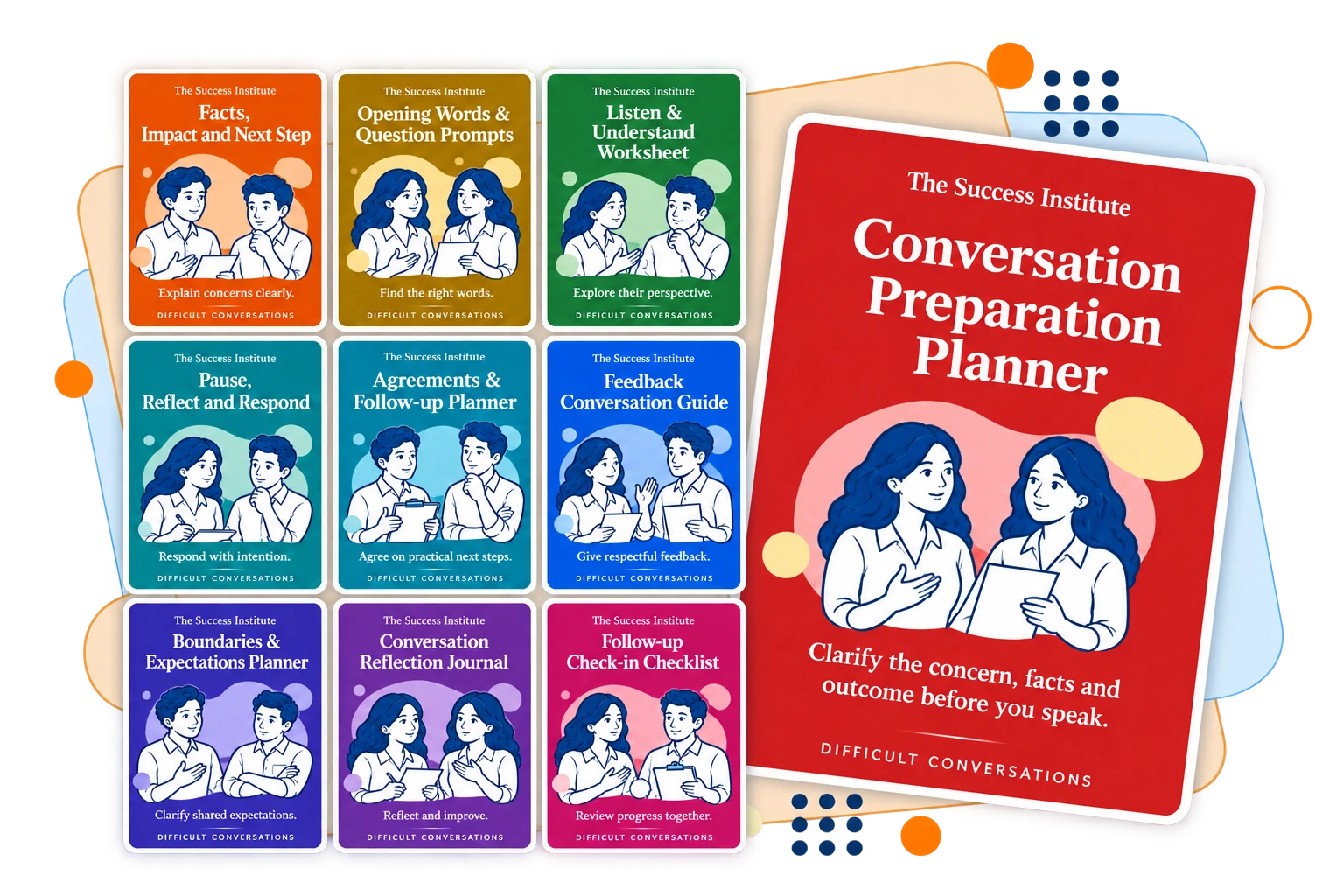
The Pause, Reflect and Respond resource in Clear Conversations Toolkit can help you prepare for moments when emotions rise. The Listen & Understand Worksheet can support the questions you want to ask.
You can also use the free Conversation Preparation Checklist before your next difficult conversation.
A brief application outside work
A personal conversation can also become defensive. If a family member says, “You always blame me,” pause and check whether your wording was too broad. You could say: “I am talking about this one arrangement, rather than everything you do. Can we look at what happened and decide what would help next time?” Listen to their explanation and keep the discussion specific. Take a break if you cannot continue constructively. Where raising a concern could expose someone to threats or harm, prioritise safety and seek appropriate support instead of relying on a conversation technique. Avoid trying to settle a disagreement in front of other family members. A quieter setting and a specific question can make it easier to hear each other without turning the discussion into a public argument.
About The Success Institute
Practical communication and management resources for Australian managers, teams and professionals.
Meet Paul Puckridge →